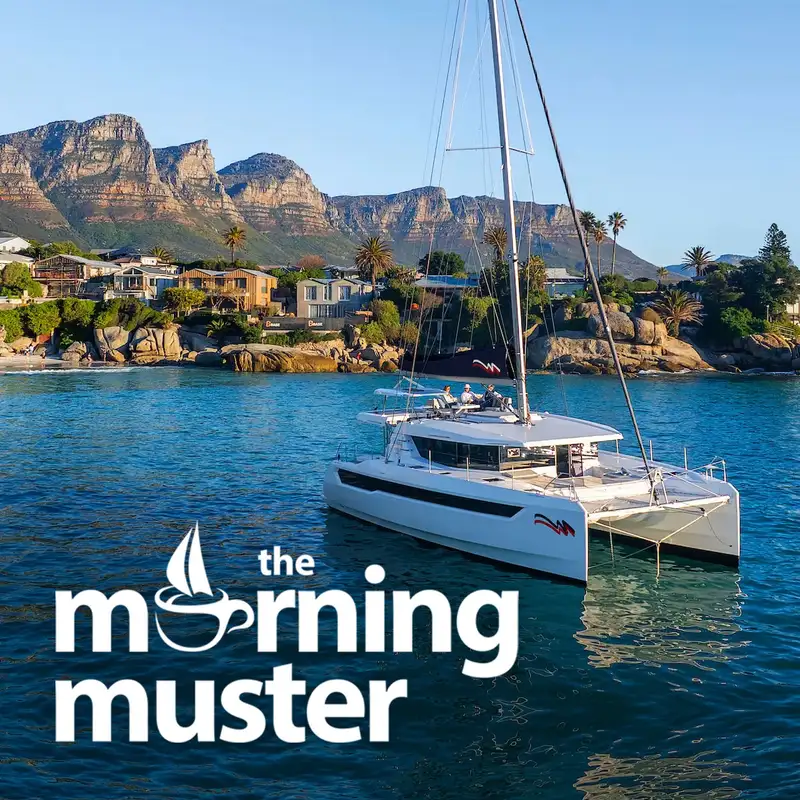
Charter Like a Pro: Insider Hacks and Secrets
Morning Muster Podcast: Chartering a Sailboat
The morning muster. The Morning muster. Let's muster. Let's muster Ben. The morning mustard. All right, cool. In this episode we're gonna talk about chartering a boat. But we should tell them about our new expeditions first. Uh, like a promo thing.
Yeah, definitely. our more self a sail training program is really a great place to start if you wanna prepare for chartering a boat.
Most of our students go on to charter boats or buy boats after a more self a course. Yeah. Or sail around the world. Totally. And in response to this increasing desire for certification. Now some of our programs are offering a SA certification and all of them offer the more self certification and US Coast Guard Sea Service letter.
Right, right, right. We have expeditions in Maine, new England, and a transatlantic this year, and we also just posted new expeditions in the med from Rome to Greece and Turkey. I wanna go on that one, as well as family expeditions, which are private training expeditions that include children and an introduction to the cruising lifestyle.
I'm really excited about those, just how we're gonna involve the children in that and it's gonna be a really great family experience.
But let's get back to chartering because there's more than just learning to sail and cruise. There are definitely nuances to consider. And so that's what we're gonna talk about in this episode. We've got two excellent guests to talk with us about chartering a boat.
Our first guest is Tracy Saric. She's founder of the Voyage Makers, which is a sailing school in Vancouver. B. Our other guest is Deanna Young. We met Deanna via our partnership with American Sailing where she works, and Deanna has chartered all over the world in some amazing destinations. I mean, when you say, I'd like to go there someday, Deanna's been there?
Yeah. And her family also owns a charter business.
[00:01:35] Ben: Now, I, I actually wanna start with right, with the nitty gritty because Tracy, before we started recording, you were talking about Poop Week and you and Deanna were giggling, like this is inside charter business stuff that we don't know about. I wanna know, I wanna know the nitty gritty. What is poop week
[00:01:54] Tracy Sarich: well
[00:01:54] Ben: What is something that nobody thinks of when they think of charters? Chartering,
[00:01:59] Tracy Sarich: Well poop, we can be, uh, put in a lot of context. But in what I was
[00:02:03] Ben: um.
[00:02:04] Tracy Sarich: to is the way that for some reason problems on fleets of boats tend to happen in waves. So you might have a week where for some reason you've got a bunch of battery issues on a number of boats. There is inevitably the dreaded poop week where something's going on with the head on multiple successive boats.
[00:02:25] Ben: Yeah.
[00:02:25] Tracy Sarich: what you wanna try to avoid is to have something like poop week followed up by something like Grounding Week, where suddenly that's the wave. So, a lot of work in the charter business is about but also just, a lot of triage
[00:02:42] Ben: A lot of trash.
[00:02:43] Tracy Sarich: wonderful as people come and wanna have a
[00:02:46] Diona: Yes.
[00:02:46] Tracy Sarich: time.
We make sure the magic happens, behind the scenes too.
[00:02:51] Ben: okay. We can totally relate. I get it. We can relate. All right. Got it.
[00:02:55] Diona: It's the same as like owning a boat. You have these nightmare situations where you have a guest on board and we have often guests that have never been even on a boat. So we have to explain how to use the head, explain what you can and can't put in in the toilet, and what happens if, something does get clogged and backed up and not working, and how you have to fix that, which, um, truly can be a nightmare.
[00:03:17] Ben: so I have a question about this because people, charter a boat from all these different experience levels. And I've been on a few charter boats for various reasons, but there's a tiny, tiny toolbox. you know, as a sailor we have like tool lockers so that we're prepared for just about anything and we're pretty self-reliant.
How self-reliant do people need to be when they decide to go chartering? should they even be, should they even attempt to fix these things? Or if they're not, should they call someone at the charter company and will there be help? Or is their vacation just done?
[00:03:53] Diona: I get this a lot when people are wanting to book a Bear Boat charter. I've had people ask if they should bring tools with them because they don't know what the boat is equipped with, which I think is nuts to want to travel with maintenance tools. But the reality is when we're chartering a boat, we usually use like sun sail moorings, dream yachts, and they have a whole crew that it's their boat.
And so reality is they probably don't want you working on their boat, so they want you to call maintenance team to come out and fix it. I think it's nice, like on our sailing school charters, when we have our instructors on board, because they've seen it all and done it all. So if it's a quick fix, you know, check this filter, change this out, tighten this, whatever, they're able to kind of.
Troubleshoot it. But for me, if I were to be on a charter boat and I don't have any kind of maintenance background I can check the oil, uh, about it. And so I've got the charter company on speed dial to come out and, and assess the issue and fix it. And I don't wanna be charged for something if I do mess it up.
I don't want them to come back and say, oh, you guys tried this and you owe us this money now. So I hands off, let them do it. Yeah.
[00:05:01] Ben: not.
[00:05:01] Tracy Sarich: The challenge comes in when people who have a lot of knowledge in their own boats wanna come on some of the charter boats.
And, you know, there are some big differences between those boats and the charter company is intimately familiar with that boat. So that's sort of number one. And I think the reason why are very few tools is there should be the expectation that this thing's gonna be in working order. And other than something sort of a common thing that would come up in any boat, you know, those really, I would say you should expect them not to happen.
But if they do happen, things happen on season. So that does occur. and, people sort of put fewer tools on a boat because they don't want, charter clients necessarily tinkering with those boats.
[00:05:45] Ben: That makes sense.
[00:05:46] Tracy Sarich: like, how prepared should you be, I would say that. this is still boating and things come up all the time.
I think, you know, one of the qualifications of a Bareboat charter, especially as you get into more exotic locations, farther away from a base, is you do need to have a level of self-sufficiency. So you can have that, knowledgeable conversation with the base and
[00:06:08] Ben: Right?
[00:06:09] Tracy Sarich: what you're seeing.
[00:06:10] Ben: Yeah.
[00:06:11] Tracy Sarich: that you have to be an expert mechanic.
[00:06:12] Ben: here's the funny thing. Deanna, you had said that no one wants to travel with a big bag of tools.
[00:06:21] Diona: who does?
[00:06:22] Ben: wants
[00:06:22] Diona: Yeah.
[00:06:23] Ben: with a big bag of tools. We were flying to Panama. We bought a our boat in Panama, in Sante, and we were flying
[00:06:28] Diona: Yeah.
[00:06:29] Ben: get the boat, and we were weighing our bags so that we could like max out our luggage but not be overweight on the airplane. And, I kept weighing and I'm like, I kept taking stuff out and I was like, what is going on with this? And it was the heaviest bag ever. Finally, I get to the bottom of the bag and I kid you not, there was like a three foot wrench down there at the bottom and just in case.
[00:06:50] Diona: Just in case.
[00:06:51] Ben: this out and I'm like, what is this for, for the one single random time, you might need a three foot wrench.
[00:06:57] Diona: Right. I'm not, I'm not a, I'm not a light packer. I'm very much an over packer. You, you, you got me beat at tools. they've gotta have something where you're at. Right. You know, there's gotta be,
You'd hope, and especially in a marina, there's gotta be a marine store.
[00:07:11] Ben: So people don't need to bring tools. They don't need to be prepared to tinker with a charter boat, but what kind of experience or knowledge should they have when chartering a boat? And it's interesting also, Tracy, to have you here because you're in the Pacific Northwest, which is a very challenging place to, to sail.
So talking about having what kind of experience you need to charter there versus in the bbis, for example, is a whole different thing. so, What kind of experience do people need to think about before, you know, if they, if they say to themselves, I'd like to charter a boat somewhere in a few years, what can I do now to get ready?
[00:07:46] Tracy Sarich: Starting up here I don't think is any different in terms of qualify general qualifications than you see in other parts of the world. Charter companies. Some countries do have, you know, formal licensing requirements, but once you've parked that companies are looking for. Equivalent experience on a vessel the size you're about to charter in the complexity of the area that you're about to go in. So oftentimes when we see resumes up here that are people that have only been in, say, the bvs or The Bahamas, that does not disqualify them from. Chartering up here, but oftentimes there's a desire to make sure they have coastal navigation. We have complex tides and currents up here. not every one of the hazards are marked, so you have to have a different level of semen ship to, charter up here. And charter companies will, prepare you with your, either with e theory in advance or when you come a day or two, with a skipper. So it's not an area that you cannot charter, but sometimes there's a little bit more that the charter company wants to see. but that's kind of the beauty of coming up here to, the Pacific Northwest. I mean, this is one of the most beautiful and challenging areas to charter. And I would say that if you learn to master these waters here, you can go anywhere in the world.
[00:09:14] Ben: Sounds familiar. We say the same thing about Maine but I've done a lot of sailing in the Pacific Northwest as well. And I will say that, there's similar but different, it remains also very challenging with the tides and currents and hidden rocks and things.
[00:09:29] Diona: so with the sailing school, the reality is we have live aboard courses. There's a little bit of controversy about like the zero to hero kind of.
Way that we do things. 'cause you're seven days on board and you get three levels of certification after that seven days.
You can go Bareboat charter, you can go pick up a boat in The Bahamas and Charter for a week.
[00:09:50] Ben: It.
[00:09:50] Diona: It really does, I think, depend on the individual and how prepared they are to go. I, I have seen people who have said, who want, you know, to Bareboat charter and they're like, well, we've done a couple charters with the crew in the BVI, but that tells me nothing.
I've been crew also and I did not know how to sail. So, you know, it can be a really scary kind of thing. I love the confidence, but the charter companies can, I think be so, like, such a gray area on who they charter to, at least with like the bigger names like Sun Sale, moorings, dream Yacht.
'cause I have heard of people who have crewed a couple times and they let people take out a boat. Those are the ones you see whose fenders are still out when they're not even under sale because they probably don't have the sail up. They're motoring the whole time. You know, you can see those people when you're out on the waters.
But I would recommend if, if you wanting to bear a boat charter absolutely. Take the as SA sailing courses, take as many as you can. you really just need the one, oh th 1 0 1, 1 0 3, 1 0 4. but then alsotry and get on a couple crude charters.we offer at our school is called a cruise crew review, which is another seven days of sailing.
Where with an instructor who's just going over more things that, that we've covered and making you feel more confident and building that confidence and then going and taking out a Bareboat charter. And I would recommend moorings. They have a free. four hour captain on your first day, so
if you took your lessons on a fountain peo and you've got this leopard, it's a little different systems. The captain can come out, do a spin around the marina, and you get a little bit more familiar, which I think is an incredible thing to offer.
[00:11:22] Tracy Sarich: Well, in terms of levels of certification, I couldn't agree more But what, what resume reviews are typically looking at most strongly is experience level.
So sometimes I see people who have crossed an ocean, but as crew, which is actually a very significant thing to do, but how much have you docked? there are things that are sort of fundamental to chartering and being independent out there than just simply sailing.But in terms of, having,One of the school or the charter company's skippers on board. Sometimes, I run across clients who, feel that based on their levels of experience, they shouldn't need that or whatever. look, it's a, it's an art and a science. In reading a resume, you're looking at many, many factors.
And some of those factors include how long someone's been, away from the water. Sometimes it's age, sometimes it's about who their crew is. someone who is highly experienced and with their inexperienced family is very different from someone who's just out of Bareboat and now they wanna take out their, children and whatever, inexperienced people.
Those are two completely different situations. So it, it can seem a little bit mysterious. I think for charter clients who say, well, I have the ICC or some of the other international certifications, why do they want me to have a skipper for the day? And what I would say is it is the cheapest insurance policy you're ever going to get on a charter boat.
First of all, they're asking you to do that, I would consider that a reputable, trustworthy charter company if they care enough to have people on speed dial or on staff who will spend time with you. of the things that I think, is. Common for people who do have incidents out there tends to be people who wanna show up. Rush, let's go, let's go, let's go. Bags in kids on. Yeah, yeah, yeah. I know everything about this book 'cause I've chartered one sometime in the past and they haven't taken the time to transition from work life
[00:13:41] Ben: Yeah.
[00:13:43] Tracy Sarich: a second and
[00:13:44] Ben: We don't have time to relax.
[00:13:47] Tracy Sarich: You know what I
[00:13:48] Diona: I got time for that.
[00:13:49] Tracy Sarich: a valuable,
[00:13:50] Ben: Yeah.
[00:13:51] Tracy Sarich: vacation. You're ready to go. You feel the pressure of all of your
[00:13:56] Ben: Yeah.
[00:13:57] Tracy Sarich: to go have awesomeness. actually what I tell people a lot of times, especially if I'm asking them to have a skipper for the day is to say, you know, day one should be team building, right? The more you get ready now and feel relaxed, the rest of the trip will
[00:14:16] Diona: Yeah.
[00:14:16] Tracy Sarich: much more relaxing if
[00:14:18] Ben: Yeah,
[00:14:18] Tracy Sarich: knows how to dock and how to handle lines.
And so part of it is making sure, as a school or as a charter company is to make people really enjoy that vacation. That's the goal, is to give you the best possible time up there so you come again.
[00:14:35] Diona: I love that Tracy. I, I've been on a boat with my stepdad, who is a very qualified captain. He's been sailing his whole life and you know, we get on the boat and he's yelling at me to make fast
[00:14:47] Tracy Sarich: Right.
[00:14:47] Diona: and I have no idea what that means. And it would've been great to have that conversation before that opportunity to come that I needed to make fast happened.
And I think that's a really, really great way to, to look at your first day of charter. I like that team building.
[00:15:02] Ben: and also this is, this is something that we manage a lot with our sail training expeditions. we see a lot of people who are very talented sailors that come to our program, or they're very knowledgeable, but when it comes to working with their spouse, 'cause or partner, 'cause people a lot oftentimes come together on the sale training or sometimes they'll say, Hey, we wanna come just. Just me and you know, 'cause I'm gonna be the sailor of it or, and I'm always like, if you, my spouse can stay at home. Yeah, totally. And I'm always like, if you're gonna sail together, you should come together. Because a lot of our education and a lot of our training is not just on the technical side of things, but also in communication and leadership and how to
[00:15:42] Tracy Sarich: a
[00:15:42] Ben: work together.
And so, as Deanna as you were saying, your father gave you a command make fast. You didn't know what that meant. That happens so much like head up or steer this way or do that way. And there's just this, and, and I think the differences is like, well. I know Ben here is a very patient instructor and Ben could almost just like whisper something or think something.
He's very, very calm and instructing and coaching people on what to do, and it's because he is such a good sailor and also a good educator. So that's a whole, that's a whole different skillset is how to communicate with someone and teach them and bring them up to speed. That's a different skillset from just knowing what's going on with the boat and how to sail the boat.
[00:16:28] Diona: Absolutely.
[00:16:29] Ben: but, I also think it's really interesting what, what you all were saying about, how. Charter companies are looking for experience and they're, they're gonna demonstrate that experience in a number of ways. Either, with a certification or with a resume that says, I've sailed here and this was my role on the boat, or, I've chartered here with these people and did this.
You know, there's different ways to demonstrate experience. And Ben and I have been saying this for years, insurance companies, charter companies are looking for experience, and people have often asked us, well, do you offer a SA certification? And we, for years have said, no, we don't. But this is what these companies are looking for.
The charter companies, these charter companies and insurance companies, I think they kind of also are looking for experience
[00:17:15] Diona: Yeah.
[00:17:16] Ben: but we have noticed in the past few years that that certification has become more valuable for demonstrating your experience. Like it means so much more than not having. A certification would, would mean, and that it's becoming maybe more standardized or more of, of the norm. Do you guys see that trend happening too? Or is that just something we've observed and we are offering certification now this year for the first time for some of our
[00:17:42] Diona: Yay.
[00:17:43] Ben: And so, yeah. I was just curious, has this trend changed?
[00:17:49] Diona: that's hard to say. Business for us is a little slow right now, so it doesn't feel like everyone wants to get certified. But I would say that we tell people that charter companies love to see. Formal certifications from accredited school on that resume just because you're learning how to sail.
But the a SA curriculum is mostly safety. Like we're talking about safe, you know, measures and things that happen when you're underway and how to fix them. 'cause really sailing is easy. It's all those other things that happen in between that might be a little bit more difficult.
So we prepare you for emergencies and we talk about safety and taking that to a charter company and to your insurance company, when you go to buy a boat, they like to see that you're gonna get a better discount on your insurance when they see those formal certifications because they know that safety emergency situations was a huge emphasis, which is the big issue with all of that stuff.
Right.
[00:18:41] Tracy Sarich: I guess what I would say too is,when you're only self-taught and the only thing you have is experience. experience is the best teacher, but it's not necessarily the best practice is what you learn, right? So you're with people who are teaching you best practices, whether it's a SA, we don't teach a, SA, we teach IYT and other certifications, but they're all the same goal, which is to give you that knowledge base and seamanship you need with people.
hearing what, how patient you are as an instructor, it is because you're an excellent. Sailor, and it is because you are a natural and an excellent teacher, also takes time to learn how to teach that and what people think and do. So when you're around people who've been on the water to that extent, you are going to learn from them, even if you are a very experienced sailor on your own boat. so the kinds of courses that we do, we do them all. You know, we do the cruise and learn where you've got people signing up for a specific certification. But we also do what I would call private and mixed courses where there's a variety of skill within the team or within the group, right?
So some people are afraid and other people have, sailed for a lot of time. first of all, we, we teach and all of you teach to the level that your student is capable
[00:20:08] Ben: Mm-hmm.
[00:20:09] Tracy Sarich: But what we also talk about is the fact that if you are a very experienced sailor, for example, is an opportunity for you to also just bone up or learn about how to work with crew a little bit better and how we work with crew, how we coach crew,
[00:20:26] Ben: Mm-hmm.
[00:20:26] Tracy Sarich: talk together and now you're in more of a coaching, mentorship relationship. the other thing I say, and this often happens within the same school, is I think that who teaches you is often more important than whether it's, you know, x, y, Z certification
[00:20:46] Ben: Right.
[00:20:46] Tracy Sarich: there's so many different dynamics of personality and leadership and learning style that, you know, You can take a SA 1 0 3 or 1 0 4 multiple times in multiple places in the world and really learn each and every time things that later when you want to go to, you know, Norway or the Pacific Northwest or whatever, you've really got a real, library of experiences in your background there that you can frankly enjoy yourself a lot more.
[00:21:19] Ben: I love that. I love the library of experiences. I think that's key. Well stocked bookshelf. I wanna ask about, chartering with friends because a lot of times, um. It's spring break coming up or everybody has time off at the same time. Hey, let's get a group of friends together and charter a boat. 'cause you can charter a much bigger boat with a lot of cabins and sleeping space.
You could pack a lot of people on there, maybe charter, a warm location. um, so then you all fly down there and you're first coming together on the first day. You step on the boat, granted best friends on land at least. but the dynamic out on the water is different. I can remember a time when we, uh, chartered, a mornings boat in Belize. We actually chartered this boat when we had a nonprofit called Hello Ocean, where we were pairing research scientists with artists on these expeditions. And so we did this
[00:22:20] Diona: Awesome.
[00:22:21] Ben: expedition in Belize, on a moorings catamaran. Andyou know, they weren't all sailors. No, they were not. They weren't even all sea people.
We had some marine science ex scientists there, but then we had some land-based artists there and, and we said, okay. One of the things we talked about was there's limited water. Well, well, we divvied up like, who's gonna make breakfast this day? Who's gonna make lunch?
[00:22:42] Diona: Yeah.
[00:22:43] Ben: was interesting. But then we also talked about, um. There's limited water on the boat, so drink as
[00:22:51] Diona: Oh yeah.
[00:22:51] Ben: you need for your thirst and cook with what you need and brush your teeth. But we can't be using excessive water for showers. And we had some people that still showered every single day despite being able to swim in this beautiful, warm ocean.
And then as a result, some of us who knew better didn't even get to take one. we took, we took a picked that for the team, didn't we? We did take that one for the team. Yeah. Um, so when you're planning to go do a charter with friends or maybe two families come together to charter about together, what's like a checklist of like three things you must talk about before you go together?
[00:23:29] Diona: with the sailing school, we plan flotillas about two a year. And I reserve the boats, I get our alumni on board, and then, you know, we do the provisioning. We have to set the standard, we do all these things. So I think. I think one of the most important things that we do before we even get to the destination, we always do a little zoom meeting, get to know each other if we don't know each other, and there's a mix of people who've done as SA courses.
Some people might, there might be partners added who've never done sailing before. And we set the president from that even before we get to the destination, before we get to the boat. Hey, just so you guys know, there is no maid on this boat. You need to help participate in all of the tasks you are gonna do dishes, you are gonna cook, you are gonna be aware that you are sharing this space with other people.
The water situation is a big one because it's a hard concept, I think for a lot of people. I shower every day. It's not a brag. I do, I shower, I shower most days, I'll say. Um, but I do have to kind of change my mindset when I go out on a boat because I'm not gonna shower every day and I, you know, I'll jump into the water.
You know, we use our, our reef safe shampoo and soap and we kind of clean up that way, which I think is fine because I'm usually in a tropical place. I'm sweaty all day. I'm not getting that clean, So I think that that's a really hard concept for some people who don't know.
About sailing, and we always, have open conversations about water usage every day. We check the water levels. you know, we're teaching people how to wash dishes you know, we rinse 'em all in the ocean and then we do quick soap, quick rinse, you know, it's a learning curve and we just have to make sure that people know this is gonna be a little different.
number one, for me, I would say just setting that present ahead of time. Having those conversations before you ever even get close to where you're going and just letting people know this is what's gonna happen.
bring your handy wipes, you know,
[00:25:16] Ben: And don't flush 'em. Don't flush.
[00:25:19] Diona: and do not flush them. That's correct. Yes.
[00:25:21] Tracy Sarich: going back to poop week. Okay. One of the most, okay, so I, expectation, expectation, expectation. I mean, in some ways clients are easier, right? Because you're in a role where you're guiding and leading. I think family and friends, it can be tricky, right?
So, I think to have a great time with people. It's all about expectation.
[00:25:47] Diona: Absolutely.
[00:25:48] Tracy Sarich: come here and they wanna cover the greatest ground and go the farthest distance. And it's like, um, I thought last year you told me you got C six. So part of it is making sure you temper the expectation of spectacular distance
In most cases shorter hops allow for if you're sailing more sailing because you have time to sail, you don't have to think about being in the next location. the second thing is in addition to the water conversation, which is critical, and I too have sacrificed my own, you know, armpits for the sake of my
[00:26:27] Ben: Right,
[00:26:28] Tracy Sarich: that
[00:26:28] Ben: or they have sacrificed.
[00:26:30] Tracy Sarich: the time.
[00:26:30] Diona: maybe, yeah, yeah, yeah.
[00:26:32] Tracy Sarich: I am not sacrificing them,
[00:26:33] Diona: sacrificing.
[00:26:34] Tracy Sarich: wanna get too close. Just kidding uh, the toilet talk is critical. Okay. Because
[00:26:40] Diona: Yeah.
[00:26:41] Tracy Sarich: I tell people, nothing will ruin this vacation more than this head clogging or not working. So, I do, I recommend using, whether you wanna call it the ugly bag method
doggy bag, sorry about that doggy bag. Um,
[00:26:59] Ben: I know what we call it.
[00:27:01] Tracy Sarich: what do you call it?
[00:27:02] Ben: Well, we, we call the thing that goes in the, the trashcan, the, the bag. But we call them, we call 'em shit tickets. So it's it's the shit ticket bag.
[00:27:12] Tracy Sarich: any day of the
[00:27:12] Ben: Yeah. You put it, you put the shit tickets in the bag.
[00:27:15] Tracy Sarich: a roll of it.
[00:27:16] Ben: Yeah.
[00:27:17] Tracy Sarich: But the thing about it's that, so, you know, and I mean, I do it,
[00:27:22] Diona: I gotta write that down.
[00:27:23] Tracy Sarich: I try to make it funny. Listen, the thing that gets hard is you are in tight quarters.
[00:27:29] Ben: Mm-hmm.
[00:27:29] Tracy Sarich: mean,
[00:27:30] Diona: Mm-hmm.
[00:27:30] Tracy Sarich: quarters and depending on the situation,
So to me, I try to make it as open and humorous a conversation as possible. Okay. Which I like I said, call my toilet talk. But also, I also provide incentive. Okay? So for those of us who are gonna agree to this program, I have wipes. This can be a fantastic experience. Okay? But with great, privilege comes great responsibility, okay? So I try to make it funny and talk about it. Realistically, you are going to have guests who are not gonna hear you It's a natural thing they're not used to doing. So for the first couple of days, it's single ply. Only in a small amount in those bathrooms until I feel like I have a sense of whether or not people are following and then, then comes out the, you know, other, other, a Coutre mall. But I mean, the thing about the doggy bag that I think is nice is especially if you have teenagers on board, they are not going to want to dis discuss with you their personal, who knows what. If you give them the opportunity to sort of get rid of it quietly, in a way that's not embarrassing, you don't wind up having a
[00:28:52] Diona: Yeah.
[00:28:53] Tracy Sarich: head and you know they're not gonna tell you. that can apply to adults too.
I've had many people in charter, Walk in the office and how was your trip? Fantastic. And it's like, know, there might have, maybe there might have been a tampon that went down in the head and it's just
[00:29:14] Diona: No.
[00:29:15] Tracy Sarich: okay,
[00:29:16] Ben: be sure to have, might have been Might,
[00:29:19] Tracy Sarich: Maybe it's
[00:29:20] Diona: Who's who did that?
[00:29:22] Ben: sure.
[00:29:23] Diona: Yeah.
[00:29:24] Tracy Sarich: guys. Uh, we're gonna have to, you know,
Charter companies depend. It depends on how they operate. Some charter companies will charge you a flat rate for a clog, and They're simply gonna haul that boat or whatever they've gotta do and replace it.
So the cost can be unfortunate. Um, I'd rather spend my, money on a spa appointment or,
[00:29:46] Ben: Yeah.
[00:29:46] Diona: Mm-hmm.
[00:29:47] Ben: Right. That's a good point. Yeah.
[00:29:50] Diona: I think it's interesting, Tracy, that you, you say that, you talk about, you know, the toilet, toilet talk and it's, uh, you make it humorous and, and memorable.
[00:29:57] Tracy Sarich: right.
[00:29:57] Diona: Uh, because on our charters we lead with fear
[00:30:01] Tracy Sarich: Oh, I do,
[00:30:02] Diona: and
[00:30:03] Tracy Sarich: throw in this, I sprinkle in terror, don't I? Just try to make it
[00:30:07] Diona: Okay, good. I have, so I have, I have brought, I have brought many friends on charters with us, and every time they're, they're so scared because they don't wanna forget to do that. They don't wanna put the toilet paper in the toilet. And my stepdad, who's always the captain, his, his thing is if, if your head gets clogged, you are gonna be taking it apart
[00:30:28] Tracy Sarich: right.
[00:30:30] Diona: and sucking out whatever the issue is.
[00:30:32] Tracy Sarich: That's right.
[00:30:33] Diona: And so, yeah. So they get very, um, they get very concerned that they might have to do that. And so right away, right from the beginning, you're, if you're gonna have to do something really gross that you're not gonna do, so just prevent it.
[00:30:46] Ben: it that every
[00:30:46] Diona: It's,
[00:30:47] Ben: of the morning must we somehow talk about poop? Yeah, we need to change the time because it's failing. mostly sailing for us
[00:30:55] Diona: it's, it's, this is how, it's a real world. It's a real world.
[00:30:58] Tracy Sarich: human.
[00:30:59] Ben: thing. I worked on tugboats for a few years and one thing I learned, and the same thing, we put all the, uh, toilet paper in a trash can. Nothing goes down the heads, even though it's a big toilet bowl. Um, and one of the captains would put his toilet paper in the, in the trash can and then lay a paper towel over it so you wouldn't see it. So you wouldn't see. And I, I was like, that is really classy. I'm taking that with me. But you didn't, a takeaway.
You invented the pusher. Uh, we do have the pusher for our toilet, trash cans, which is an discarded or finished paper towel roll. cardboard tube. The cardboard tube. You can use that to kind of compress the toilet paper down. Yes. So, and then,
[00:31:40] Tracy Sarich: like it.
[00:31:40] Ben: yeah. Yeah. Anyway, details. But towel layover.
I was thinking that when you mentioned the, um, pons, the high school kids trying to be discreet. Who wanna be discreet. Yeah. Anybody who wants to be discreet, just a, a paper towel layover at the top is, is nice.
[00:31:53] Tracy Sarich: Sometimes people have a hard time going to the bathroom, and so part of the reason I do try to instill as much fear as humanly possible in my toilet talk because I too am afraid. However, um, I do think it's important to sort of make it kind of an open, funny thing because if you do have someone, who is really having a hard time. disclosing that they haven't gone for a few days, you know, that can turn into a very different kind of situation for you as skipper of the boat, So I try to keep it where, you know,
[00:32:25] Ben: Yeah.
[00:32:25] Tracy Sarich: you feel comfortable with me
[00:32:27] Ben: Yeah. And there's,
[00:32:28] Tracy Sarich: me your
[00:32:28] Diona: Very good.
[00:32:29] Ben: yeah, for sure. All right, cool. Yeah. Um, let's move on from the head talk. I love it though. It's, it's of course one of my favorite topics.
[00:32:38] Diona: It's necessary. Yeah.
[00:32:40] Ben: Ironically, Benji likes cleaning the head and fixing heads. No. That I do not.
[00:32:46] Diona: I'll say it didn't look like it.
[00:32:47] Ben: on the schooner, you're always like, oh, it's hard. I, I think you, when you're stuck doing a task, you might as well make the best of it. That's Benji's.
[00:32:54] Diona: Yeah.
[00:32:54] Ben: it is. I really, I like doing it, but I try to make the best of it.
[00:32:58] Tracy Sarich: look at everything that goes wrong as a learning opportunity
[00:33:01] Ben: That's exactly
[00:33:02] Diona: That's right.
[00:33:03] Ben: we've talked about a lot of challenges with chartering and the things that can go wrong perhaps, but what about Why should someone charter? Like What are some of the exciting things about taking a charter vacation, going for a week or two and chartering a boat with your family, your friends, anything.
[00:33:22] Diona: I would tell you my, my top two favorite things about chartering. one, getting to explore places on a boat is so much more unique than, walking around the streets of Rome.
They're both amazing. I recommend both, but you know, we've been to Sicily. And to, parts of Greece that you can't get to any way else besides a boat. Um, I've sailed past volcanoes and under Poseidon's Temple and in Tahiti, you know, you don't have to pay for a super expensive over the water bungalow.
You can rent a boat and you have that all day, every day. And so it's this really unique experience that you get to travel the world and see the world from a different angle, from a boat. my other favorite thing about chartering is experiencing the food in a different way.
Because we don't have to go out to eat every day. We're cooking on board. But you're also, you're provisioning at this store where you might not understand the language on some of these things. You know, we, we ended up buying. 10 gallons of sparkling water because we thought it was regular water and it was all in Greek.
and you use these like new ingredients that you haven't used before, and a fisherman comes up and you buy a local fish and you can cook that fish right there, or catch your own fish and, and cook it on board and have this really kind of unique dining experience with your boat mates. That I think is, is so fun.
You get really creative. You find new ways to make things. I love cooking, so I think that's probably big for me. But then even going to shore and, you know, seeing these people who are so excited to see you, because it might be low season.But, you know, It's d it's hands down. One of the most, my, one of the most favorite things is just eating on board and experiencing that.
[00:34:59] Ben: Cool. And getting creative with what you have. Mm-hmm.
[00:35:03] Diona: Uh, we call it, we do chopped dinner at the end of the week. Every, uh, the last dinner, it's everyone comes on board. We bring all of the food together and we think of something to make. We kinda do like little smorgasbord. I don't know if you guys ever watched the show Chopped, where you have, you know, the six ingredients you gotta make a meal.
We love that show. And so we, we, our last night of charter, it's always a chopped dinner. We use up whatever we can. We don't wanna waste anything. We, we get really unique and creative of what we're making, and then we serve everyone. So if we're with like three or four boats, we make sure everybody eats and, and has a good time.
And it's, it always is a good meal and it's always super fun. And somebody has to make a cocktail too, because that makes everything better.
[00:35:42] Ben: Understood. Yeah.
Tracy, what do you think? so unique about a charter vacation versus
[00:35:48] Tracy Sarich: Everything Deanna said is absolutely right in terms of the experience and how you get to touch a culture differently and all those things.
you also relax differently. I mean, you have the chance to really have your own space, your own time. I love meeting people in the Marinas. Um, boating culture is its own culture. And the thing that's what so wonderful is it's so similar everywhere in the sense that there's always this sense of comradery and helpfulness.
and, you know, in terms of comparing it to boat ownership, as expensive as charters are on an individual basis, when you look at it and think about what that vacation is. As a boat owner, uh, it's a lot less expensive than boat ownership. So for you to gain a lot of experience on charter boats, different boats, and you wanna own a boat, frankly, there is no better way to know what you like or don't like in a
[00:36:51] Diona: Mm-hmm.
[00:36:51] Tracy Sarich: format than using that boat.
And so I often talk to people about, you know, if you're still exploring and you've got the long list, go charter a few times. Uh, frankly, it'll save you a lot more money than it will be to buy a boat that you either weren't quite ready for or didn't expect to have. The things that you, you know, thought weren't gonna be a big deal that actually are deal breakers for you.
[00:37:15] Diona: You could take the charter boat out and tinker with it and break that before you go and try to break your own boat. You could try trial and error. Yeah,
[00:37:23] Tracy Sarich: deposit. Exactly.
[00:37:24] Diona: exactly. Yep. I would also, I would add that,if you wanted to, you can buy a boat, put it in charter.
And part of that program is you can charter their boats anywhere. So even though your boat is in the bvi, you can go to Belize or Tahiti or wherever and do a trade off for your boat. That being said, charter company boats can just get destroyed. again, you, you break those boats before you go and break your own boat, but that is, that could be your own boat.
Soif you really are gonna do a ton of chartering and there is that little bit of trade off when you do own a charter yacht, charter boat. Um, but I, I feel like at the same time it's probably best to just charter, take 'em out eventually. Maybe like when you find a spot that you love and you don't wanna leave, you feel like you wanna just cruise up and down the Caribbean, then you buy your boat.
But until then, yeah, take those charter boats out.
[00:38:17] Ben: I liked what you had to say about, uh, how you said you can relax differently out there.
[00:38:24] Diona: Mm-hmm.
[00:38:25] Tracy Sarich: Yeah,
[00:38:25] Ben: for me, if I were to step on a charter boat for two weeks versus going sailing for two weeks on my boat, it would be a different level of relaxing because if I'm at anchor on my boat, I'm thinking about, well, what's the next boat project on the list that I can tackle in the next few hours? so yeah, That would be a nice
[00:38:44] Diona: Is that, that's not relaxing.
[00:38:46] Ben: No, no,
[00:38:47] Diona: That's not
[00:38:47] Ben: It's not, it's not.
[00:38:47] Diona: relaxing.
[00:38:48] Ben: So on a charter boat, you're not thinking that because you don't have to do any of that at all.
[00:38:53] Tracy Sarich: in addition to not thinking about your own boat projects or your boat things because you're on the charter boat, um, I also meant that, you know, when you're on vacation and staying, whether it's Airbnbs or hotels or whatever it is, unless you're back country, you don't have the opportunity to just be on your own like you do on a charter, like you do when you're exploring by shore, at Anchor, whatever. Um, it, it's just, I don't know. I'm obviously, you know, got the bug.
[00:39:27] Ben: Yeah. Yeah, go ahead. I wanted to ask you, you know, we talked a little bit earlier about having a skipper on board for the first day or first four hours to kind of introduce you into this charter. So for these vacations, do you think it's better to charter bear boat and maybe get four hours of a skipper at the beginning to orient each of the boat, but for the most part, be sailing this boat on your own with your friends or family, or hire a skipper to sail the boat you?
[00:40:02] Diona: There could be so many factors into it, because if you have a skipper on board, they have to have a cabin and a head, right? So you, that minimizes your space that you can bring people on. I have also heard horror stories of the captain because they're just sailors and they're just hired to sail that boat they have no interest in, in doing anything else besides sailing the boat.
I had one story of a, a European skipper who just, you know, stood at the back of the boat and smoked cigarettes all day, which would be incredibly unappealing for me. I would hate that. I would not want that on my charter. But, you kind of had to take your chance and hope that you get, a fun or interesting or excited skipper who loves where they live and loves to explore.
but I think you could get somebody who maybe is just, it's just a job and this is how they make their living. In Grenada where we have our own instructors and we do skipper charters. I love to promote those because I know our guys, I know what they're capable of. They love where they live.
They love to show people around they're gonna catch you a fish or try to catch a fish and, and they know everybody on the island. So it becomes this really kind of wholesome, fun, like, you know, little embrace, um, when you do that. Exactly.
[00:41:09] Ben: captain role, but also part a hospitality role or tour guide.
[00:41:13] Diona: Absolutely. But I don't, it could be 50 50, right. You just never know what you're gonna get, which I think is, is really scary.
But it's just one of those unpredictable things that I think, unless you know who it is or you know where you're going and you're feeling good about that, I, the Skipper Charters could be kind of scary to me. I think if you can Bareboat charter, I would bareboat charter for sure.
[00:41:33] Tracy Sarich: Well, I hear everything you're saying. I mean, you don't know sort of what you're gonna get. You're on a boat. Okay, so you've got the space constraint, et cetera. I will say this though, like we do, uh, up here in the Pacific Northwest, we do a lot of skipper charters. Um, a lot of private courses and it can be in a variety of settings.
So we do flotilla where we've got, you know, skippers on some boats. Other people are sort of new to the area or they might need some experience after that, you know, zero to hero course to sort of get their legs under them. I like to say, you know, I mean you wanna a skipper that understands what it is to have a vacation with somebody else's family, right?
They need to know how to disappear. When they, when it's, time to disappear. the upside of having a skipper with you if you are an experienced person is if you are in a place that's either very complex, that's very unknown to you, or you have, maybe a group of people that's quite large and there is uncertainty as to whether or not they've got the crew capabilities to do that trip. So, if this is your first time chartering a great big catamaran, and you have not done something like this before, and you've got the whole, family with you of different ages, you know what that captain or that skipper can be your real skilled crew. think it depends, but I mean, the one thing I will say just to, go back to what I said before about, um, experience being sort of the key thing that I think most charter companies throughout the world look at is, um, if you're being recommended a skipper for the day or for a few hours, or for a couple of days, regardless of, you know, whether or not you think you have a lot of experience out there, if they're suggesting it, they're suggesting it for a reason.
Because for charter companies having to organize a skipper for you, let alone lose that sale because you're adding an expense of a skipper, that's not their first choice. They're doing it because they actually think you need something that, that skipper can bring you to give you that great vacation.
[00:43:46] Ben: Yeah, I really liked what you had to say, Tracy. It made me think of, families especially where the adults, the parents may be very good sailors and very good parents, but then you're trying to be a parent and sail at the same time and now you're being pulled in multiple directions.
Even in our own house here, Haven will come in and say, daddy, daddy and this and that. And Benji will be like, I'm cookie dinner. I can't do that right now. I can't do two things at once. And now suddenly when we're sailing, we're sailing and cooking and parenting.
And so having that skipper can relieve some of those responsibilities. That's great. Yeah, it sounds really good. Um, oh well that's why we had a, a skipper charter, uh, in Belize. 'cause we were focused on the science and filming. Yeah, exactly. So we could have sailed the
[00:44:32] Diona: Mm-hmm.
[00:44:33] Ben: but we were focused on something different.
[00:44:35] Tracy Sarich: have longstanding clients where we go out yearly because they have a young family, so it's
[00:44:40] Diona: Yeah.
[00:44:40] Tracy Sarich: the three kids and the family, and we're learning. But also it gives the parents a chance to actually sail and enjoy that sailing experience.
[00:44:50] Ben: Yeah.
[00:44:50] Tracy Sarich: out with the girls or whatever the thing
[00:44:52] Ben: Yeah. I, I wanted to ask you guys if you, if there was any, as far as territory or regions that you think if someone's new to Bareboat, chartering, maybe they've done some crude chartering, now they want to go bareboat, is there a particular place they might want to consider first that maybe isn't an easier entry point versus Maine or the Pacific Northwest that may require more skills?
[00:45:14] Tracy Sarich: I'll say though, my shout out to the Pacific Northwest is we have a big variety here. So we have very protected areas where we teach beginners from the very start. So while we have very complex areas that we wouldn't send a, a new person to, we have all of that here. So I think this is a, an amazing place, but I also think learning down in the warm waters, it's such a beautiful way to just fully experience the, um, every sensory part of being out there on the water.
What do you think?
[00:45:47] Diona: I would say, honestly, when you asked that question, my first thought was, go to the bvs. I, I am a, I'm a diehard Grenada fan. I would say go to Grenada anytime.
But I do feel like, because the BVI makes it pretty simple to charter a boat, you know, you got a lot of people there. you don't have a lot of dramatic, reefs or, Tight spots or anything like that. You don't have to med more, you know, people I think could be really intimidated about sailing in Europe.
I wouldn't recommend that for your first charter. probably anywhere in the Caribbean, I would say would be good. Somewhere where youUm, you don't feel intimidated by the surroundings. You're not nervous if they don't speak the same language as you or something like that.
I went to the BVI for the first time in, June, and I had never been, and people always wanted me to compare BVI to Granita, and they're they're completely different places, completely different worlds. But the BVI was just super easy, super chill, lots of things to do. Um, we, we did sail a lot, but you didn't have to sail a ton and there weren't a lot of scary things to happen.
you know, in Belize, there's, there's reefs and. Um, at holes or whatever they're they have a lot of, you know, don't sail here, you cannot go here, it could feel really intimidating. I get so many people who are like, we wanna go to the Mediterranean, but we're so nervous to med more
you know, I think probably even the most experienced sailor might be a little nervous to do it, because there's likely four Frenchmen on one boat and five Italians on the other boat standing there with their arms crossed, making sure you're doing everything right.
[00:47:13] Ben: always
[00:47:14] Diona: the reality is like, you know, it is, you know, you gotta back a boat into this little spot and, you know, practice makes perfect.
And we tell people all the time, like, you're on vacation, don't let it ruin your vacation. Have a good time.
[00:47:28] Tracy Sarich: In terms of the docking intimidation, You know what, who's ever voted for any length of time has had a docking situation go sideways. So However they look with their arms folded, they've been there too. So people are actually not thinking what you are fearing, that they're thinking most of the time. Um, did you ever, uh, you were in the Pacific Northwest, did you experience the Gulf Islands up here at all?
It's quite peaceful up here. It's quite protected, the winds and the, from everything. I don't know what you'd experienced up this way
[00:48:01] Ben: The islands are beautiful. I was, um. based outta Anacortes, Washington. And we did, we did the San Juan and the Gulf Islands, and I was with Outward Bound when they had an Outward Bound school up there. Mm-hmm. Yeah. I gotta take Benji up there. Just, uh, I, I've never been out there. Welcome to Sail, at least.
[00:48:17] Tracy Sarich: up
[00:48:18] Ben: Yeah, it's beautiful.
I think a lot of people who listen to this podcast probably are interested in chartering too, so this is great.
Alright, well thank you both for talking with us. Yeah, thanks a lot. Great, great.
[00:48:28] Tracy Sarich: you so much.
[00:48:29] Diona: you. Thank you guys.
[00:48:30] Ben: Thanks for listening to the Morning Muster. To find out more about our sail training programs, go to morse alpha.com. That's M-O-R-S-E alpha a LPH a.com. We've got some great expeditions coming up. We're sailing to the med. we've got a great trip going from Italy towards Greece. Yeah, I'm really excited about that one.
And then we're also offering a new offering this year. Family style expeditions for a family with children. cruising in the Greek islands, cruising in the Greek islands. You're gonna learn with your kids so that you're prepared to own your own boat and go cruising with your children.
go to more self.com, send us a message. Give us a call. We'd love to talk.